Chien Tan
Loveboat, TaipeiChien Tan is the residential summer-program setting that turns Ever Wong’s trip to Taiwan into both a system of confinement and a place to test new freedoms. Its dormitory rules, classes, chaperones, and demerit board govern daily life, yet its students repeatedly bend those structures into opportunities for friendship, dance, and self-definition. By the time Ever leaves, the place has become more than a summer residence: it is where the connections she has made and the cultural meanings she has begun to read accompany her into the future.
Rules, Surveillance, and Escape
Chien Tan’s authority is visible in its demerit system, which makes rule-breaking public as well as disciplinary. In the lobby, Ever sees a wall-mounted board listing students under their Chinese names, with columns of check marks beneath Xavier Yeh’s and her own names. The display strikes her as juvenile, but its presence makes the program’s supervision concrete: misbehavior is counted, recorded, and attached to each student.
The students nonetheless turn enforcement into a repeated game. During a week of nightly escapes, Ever and her companions slip past chaperones in dresses and heels. Their attempts to avoid being caught become easier as the adults grow less committed to stopping them; Mei-Hwa Pan even begins looking away, so they can leave without sprinting for the gate. The group moves from Club Kinki’s complimentary-drinks hour to Club GiGi and onward, stays out until four, and sleeps through the following day. For Ever, every failed pop quiz means another Wong Rule has been broken, and enough demerits might even remove the conflict between the Tour Down South and Swan Lake. The rule system remains in place, but its accumulated penalties become something the students can use to negotiate their own time.
The summer’s nightlife is not Ever’s final relation to the program. Later, she avoids Xavier in Mandarin class by moving to the front beside Debra and Laura, and leaves as soon as class ends. She spends the next days doing homework in an empty classroom under Mei-Hwa’s supervision; Mei-Hwa rewards the effort by removing a demerit. Ever talks with her more about music and family, while students launch sky lanterns from the balconies of the Grand Hotel. The contrast matters: the same institution that records infractions can also make space for study, conversation, and a different kind of attention.
Classrooms, Language, and Belonging
Chien Tan’s lessons place language at the center of Ever’s changing sense of Taiwan. During class, the Dragon teaches radicals, the components of Chinese characters, while Ever taps out a rhythm under her desk, plots a new dance, recites poetry, and sings “Liǎng Zhī Lǎo Hǔ.” The lesson does not remain an abstract exercise: the shapes of the characters become images she can connect with—water, fire, heart—and a way of approaching a place whose writing initially seemed inaccessible.
Mei-Hwa also speaks to the students about Taiwan’s more than sixteen Aboriginal tribes, who make up 2.3 percent of the island’s population, or a little over 500,000 people. Her lesson makes the class a venue for learning about communities beyond the students’ immediate social circle. At the airport before leaving, Ever still cannot read more than a few dozen characters, but signs, newspapers, and magazines no longer appear to her as random symbols. They are full of recognizable meanings—doors, eyes, hands, men, meat, water, hearts, rain, trees, fire, and more. Chien Tan has not made her fluent; it has changed what she can see in the language around her.
That education is tested by the students’ conduct as well as their lessons. In a rural dining room, a tourist complains loudly that the staff cannot speak English properly and that nobody there speaks English. Mei-Hwa’s cheeks lose their color, and the conversation around the room stops. Ever recognizes the contempt as a form of racism she has encountered before, including insults directed at her parents in the United States. Her first impulse is to ignore it, as she has done in the past, to spare Mei-Hwa embarrassment. Instead, she sets down her plate and walks toward the tourists. Chien Tan’s experience has not erased that reflex, but the scene marks her choice not to let silence stand in for protection.
Friendship, Conflict, and Shared Work
The program’s social life makes its rules porous and its relationships consequential. After a night out, Ever returns to Chien Tan burdened by questions about why Xavier told his aunt that they were not really together. She enters through a side door into an unusually empty lobby, while panicked voices rise from the salon next door. Against the demerit board and the ordinary architecture of the program, the unseen disturbance interrupts her private concern and reminds her that student life includes crises not contained by its disciplinary routines.
Ever and Xavier’s connection later falters. After he stops speaking to her, she avoids him in class and concentrates on her own work; when she sees that he has passed his final exam, she knows he must have done well in the Mandarin conversation that counted for twenty percent of the grade. She passed with the benefit of his tutoring, but now cannot reach him even to acknowledge the change between them. She names the loss as a lost friendship. The distance carries into preparations for the talent show: Ever wants Xavier to display his sketches, including work she has seen in his sketchbook, but he slips out before she can catch him and will not speak to her. The program’s shared classes have brought them close enough for his absence to register as a real break.
The talent show, in turn, becomes an occasion for Ever to imagine Chien Tan as a platform for everyone’s abilities. She argues that the show should take place at the Theater, pointing to Mike Park’s stand-up routine, a pianist Debra has met who played at Carnegie Hall, and the five hundred students at the program. Sophie Ha is prepared to approach Li-Han and the Theater, though the plan still needs the Dragon’s approval. Ever’s proposal is collective in scale: the show should be good for all of Chien Tan, not only for her own dance group. Yet its ambition develops alongside the friendship she has lost and her wish that Xavier’s art could be included.
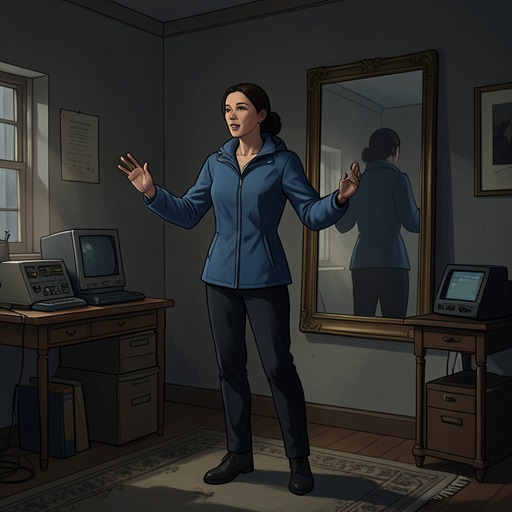
The group’s dance practice also depends on improvisation. As excursions to tombs, caves, and temples make the buses arrive later at each new five-star hotel, the dancers search for practice space away from the Dragon’s eyes. At their lodging in Kenting National Park, sixteen performers run the whole routine in a basement ballroom, using its wall-length mirror. Debra connects speakers to her phone, while Spencer and Benji carry in wooden drums almost as large as themselves. The constraints of the program and travel do not stop the performance from taking shape; they make the dancers resourceful about where and how to rehearse.
Responsibility, Change, and Departure
Chien Tan’s staff and students are central to the program’s response when Sophie is in danger. Ever and Sophie tell Mei-Hwa what happened, and Mei-Hwa takes them to the Dragon’s office. Speaking swift, fluent Mandarin, she explains Sophie’s situation and the shame it could bring on the program. Within half an hour, Matteo is sent away, before the kitchen staff has even cleared breakfast. Sophie hugs Mei-Hwa, close to tears, and Ever shares the emotion. In this episode, the program’s formal authority becomes a means of protection: Mei-Hwa’s intervention converts a private account into action by the people empowered to remove the threat.
Sophie joins Ever’s dance team that afternoon, sober in a way Ever finds uncharacteristic, with a bruised eye hidden by makeup and the shadow of a straw hat. The team’s other dancers are wary; Debra warns Ever that they have worked too hard to let Sophie in after what she did. Ever squeezes Debra’s hand, thanks her for caring, and insists that the group will be all right before calling everyone to run through the routine. The courtyard, still wet after a storm that has stripped the cypress trees of their foliage, holds both the discomfort of the group’s distrust and the possibility of Sophie’s return to shared work. Inclusion is not automatic forgiveness, but Ever chooses to make room for it.
By the time the show is over, Li-Han tells the performers he is proud of them, admitting that when they first arrived he thought they were a group of spoiled Americans. Ever accepts the judgment with a self-aware acknowledgment that they had been. Her response makes the program’s effect more complex than simple discipline or cultural instruction: the students have changed enough to recognize the arrogance they brought with them, and a staff member can recognize their work in return.
At Taoyuan International Airport, Ever’s departure completes the shift from unease to attachment. The crowded terminal no longer feels frightening; she knows there are things she will not miss about Taipei, but she has grown to love its people, night market, and street food. She expects to miss the intensity of her Loveboat friendships and is grateful those relationships will continue. She will also miss the anonymity of blending in, even as she wonders whether blending in was ever what she was meant to do. Chien Tan is inseparable from that changed understanding: its classes, restraints, friendships, and shared performances have not resolved every question of belonging, but they have made Taiwan, its people, and its language newly legible to her.